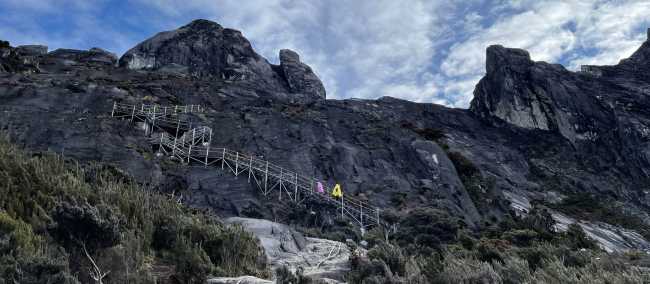
The different trail conditions to the summit of Mt Kinabalu | Brad Atwal
If you've been dreaming of a challenging but achievable adventure, Mount Kinabalu in Malaysian Borneo is probably on your radar. At 4095 metres (13,435 feet), it's the highest mountain in Southeast Asia and one of the region's most rewarding treks.
But how hard is it to climb Mount Kinabalu? Can the average fit traveller do it? And what should you know before you book?
At World Expeditions, we've been helping trekkers reach the summit of Mount Kinabalu for decades, and trekking has been our thing since 1975. We’re here to give you honest, experience-backed advice on what it takes to reach the top.
How Hard is Mount Kinabalu? Let’s Break it Down
Climbing Mount Kinabalu is challenging but achievable for most reasonably fit people. Here's what the trek involves:
- It’s a two-day climb with an overnight stay at a mountain hut around 3200m (10,500ft)
- Day 1: Trek approx. 6km (3.7mi) from Timpohon Gate to Panalaban over 4-6 hours
- Day 2: Pre-dawn summit push (approx. 2.7km/1.7mi) to reach Low’s Peak (4095m/13,435ft) for sunrise, then descend all the way down to park HQ
- Total elevation gain is about 2200m (7,218ft)
- You’ll spend multiple hours trekking at altitude, often with steep steps or slab rock
If you’re comfortable walking for 6-8 hours per day with a small daypack, including steep ascents and descents, you're likely a good candidate for this climb.
How to Train for Climbing Kinabalu
The trek doesn’t require technical climbing skills, but it does demand cardio fitness, stamina, and mental preparation. If you're active – walking, hiking, cycling or attending fitness classes 3-5 times a week – you’re in a great position to prepare.
To get trek-fit:
- Train with stairs or hills regularly
- Include walks with 400-600m (1300-2000ft) elevation gain whre possible
- Strengthen legs, core, and balance with exercises like squats, lunges and planks
- Hike with a 5-8kg (11-17lb) daypack
The descent can be surprisingly tough on knees and legs, so hill training and practice hikes with descents are a must.
What Makes the Climb Easier: Support and Planning
One of the biggest differences between a struggle and a successful summit is your support crew. World Expeditions provides:
- A fully-supported climb with professional licensed mountain guides
- All meals, park permits and accommodation arranged
- Accommodation in Panalaban lodge with dorm-style rooms
- Private transfers from Kota Kinabalu and back
This means you can focus on the experience, rather than logistics or safety worries.
How Challenging is the Altitude on Kinabalu?
Altitude can affect anyone above 2500m, and the summit of Kinabalu is just over 4000m. While most people experience mild symptoms like headaches or fatigue, serious altitude illness is rare due to the short duration at elevation.
We recommend:
- Taking the climb slowly – your guides will set a sustainable pace
- Drinking plenty of water
- Getting a good night’s rest at Panalaban
- Letting your guide know if you feel unwell
What to Pack for the Climb
Conditions can vary wildly on Kinabalu. Expect warm, humid jungle below and cold, windy conditions at the summit. You’ll need:
- Layered clothing (base layer, mid fleece, rain/wind jacket)
- Gloves and warm hat for summit morning
- Comfortable hiking boots with grip
- Headlamp for the summit climb
- Snacks and 2L of water
A full gear list is provided upon booking.
Is Kinabalu the Right Trek for You?
If you’re moderately fit, enjoy a physical challenge, and want to experience a world-class trek in a stunning alpine environment without technical climbing – Kinabalu is for you. It’s tough, but absolutely doable, and with the right preparation and support, it’s a goal well within reach.
Explore Our Guided Mount Kinabalu Climb
Join World Expeditions for a safe, well-supported ascent of Borneo’s most iconic peak. View our Mount Kinabalu trip here.
A Final Note on Park Fees and Permits
Mount Kinabalu sits within Kinabalu Park, a protected UNESCO World Heritage site. All climbs must be arranged through a licensed operator, and daily numbers are capped to preserve the trail and protect the environment. Park fees, lodging costs, and porter services are regulated and set by Sabah Parks authorities. These mandatory costs make up a large part of the total trip price, regardless of which operator you choose. With World Expeditions, all fees are included and arranged on your behalf so you can focus fully on your journey.