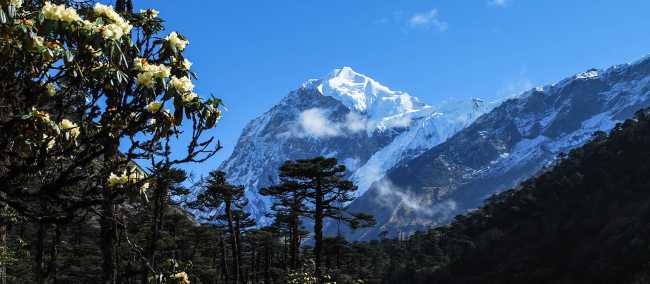
Rhododendron forest, in Kanchenjunga area. Sikkim Himalaya, India
Perched in the shadow of the mighty Kangchenjunga (the world's 3rd highest mountain) and nestled between Nepal, Bhutan and Tibet, Sikkim is one of the Himalaya’s best-kept secrets.
A former kingdom and now India's least-populated state, Sikkim offers something rare in the world of adventure travel - silence, solitude and soul-stirring scenery that few have walked through.
Whether you’re drawn by the culture, the mountains, or the flowers that colour the forests each spring, Sikkim rewards the kind of traveller who seeks meaning in the journey, not just the destination.
Where is Sikkim?
Sikkim sits in the far northeast of India - geographically small but culturally immense. From subtropical valleys to alpine pastures and high passes, the landscapes are remarkably diverse. Much of the region remains protected and lightly trekked, preserving its wild charm and spiritual pulse.
Access is usually via the West Bengal hill towns of Darjeeling or Kalimpong – gateways known for their tea estates, Tibetan monasteries and colonial-era architecture. They offer a soft cultural landing before your journey into the mountains begins.
Why Visit Sikkim?
1. Unspoiled Trails
Unlike the well-trodden routes of Nepal, Sikkim’s trekking paths remain largely unknown to the wider world. You’ll share the trail with yaks, prayer flags and forest winds – not crowds.
2. Rhododendron Forests in Bloom
Spring (April to May) transforms Sikkim into a botanical wonderland, as more than 300 species of rhododendron burst into bloom. Walking among them is like entering a living painting of colour and scent.
3. Living Tibetan Buddhist Culture
Sikkim’s cultural identity is deeply Tibetan, with prayer wheels, fluttering flags and ancient monasteries dotting the hillsides. The spiritual energy here is quiet but palpable – a landscape imbued with ritual and reverence.
4. Tea, Temples and Tranquillity
Darjeeling’s famous tea plantations and Kalimpong’s quiet charm offer the perfect bookends to your trek, a reminder that Sikkim isn’t just about altitude, it’s about atmosphere.
5. Off-the-Beaten-Path Appeal
For seasoned walkers who’ve experienced the Himalaya elsewhere, Sikkim feels like a rare second chapter, one that few have read, but many come back for.
Spotlight: The Majesty of Kangchenjunga
Rising to 8,586 metres (28,169 feet), Kangchenjunga is the world’s third highest peak - and a deeply sacred mountain in Sikkimese and Nepali culture. Its name means "The Five Treasures of the Snow," referring to the mountain’s five prominent summits.
Unlike other famous Himalayan peaks, Kangchenjunga hasn’t been commercialised. It’s not a place of summit photos and crowded base camps, but of reverence, mystery and awe. On clear mornings, you may find yourself alone, watching the ice-bound flanks of the mountain glow orange under the first rays of the sun – a moment of pure stillness.
Frequently Asked Questions
When is the best time to visit Sikkim for trekking?
The ideal time is April to May, during the rhododendron bloom. Autumn (October to November) also offers crisp mountain views and stable weather.
Do I need to be an experienced trekker?
Sikkim suits a range of trekking grades, but all options require a good level of fitness and comfort walking for several hours a day in mountainous terrain. Some treks involve camping; others stay in local lodges or guesthouses.
Is altitude a challenge?
Most routes reach between 3,500–4,100 metres (11,500–13,500 feet). While not extreme, altitude awareness is important. World Expeditions itineraries include proper acclimatisation and are led by experienced local teams.
How remote is it?
Very. While access is improving, Sikkim’s trails remain peaceful and pristine - part of their appeal. Our treks operate with full support and safety systems in place, including satellite comms and ethical porter practices.
Can I go as a solo traveller?
Yes. Many of our departures are designed to run even with small groups, including 2 to Guarantee options. Solo travellers are welcome and typically paired with others to avoid single supplements.
How does this trip support local communities?
All World Expeditions treks in Sikkim are built around low-impact travel and genuine local partnerships – from employing local guides and porters to using regionally sourced food and adhering to minimal waste policies. Your presence supports remote economies while leaving a lighter footprint.
A Final Thought
Sikkim is a destination that speaks to the curious, the experienced, and those seeking something deeper than a tick on a map. It’s a place where forests breathe history, where mountains are worshipped not climbed, and where the journey is just as sacred as the view.
If you’ve already walked the Himalaya elsewhere, it’s time to come and feel the Himalaya in Sikkim.
View Sikkim Trips